Cold Email Not Reaching Inboxes? Here’s Why — and How to Fix It.
Most cold email infrastructure for B2B SaaS teams is broken before a single email is sent. We find exactly what’s broken — and fix it in the right sequence.
Start with a paid Outbound Readiness Audit — written risk map, capacity plan, and Launch vs Fix routing in 3 business days.
🛡️ Outbound risk map ➥ domains, auth, tooling, data
🎯 Micro-ICP targeting rules ➥ right prospects, zero waste
🧭 Launch vs Fix Decision ➥ clear next steps
📅 30-Day Action Map ➥ what to fix first
Paid diagnostic. Not a sales call. No commitment beyond the Audit.
Paid written report. 3 business days. Credited in full if you proceed within 7 days.
Launch Readiness — New Setup
Best for: Starting from scratch — new domains, new mailboxes, outbound not live yet.
What you get:
➤ Tool recommendation — Instantly vs alternatives + why
➤ Domain + mailbox plan — sizing + architecture
➤ SPF / DKIM / DMARC blueprint + DNS checklist
➤ Tracking risk guidance — links, pixels, redirects
➤ Ramp + rotation plan — safe scale rules
➤ 30-day action map — what to do first
Turnaround Readiness — Fix Existing
Best for: Spam warnings, blocks, dropping open rates, unstable deliverability — outbound is breaking right now.
What you get:
➤ Outbound risk flags — domain, inbox, tooling, data — safe vs risky
➤ Root-cause map — exactly why performance is slipping
➤ Tracking + tooling cleanup plan
➤ Stabilization + re-ramp plan — safe recovery rules
➤ Fix vs Relaunch recommendation
➤ 14–30 day recovery roadmap
➤ 30-day action map
One System. Three Phases.
Every engagement follows the same path — Audit first, then implementation, then ongoing protection.
The Audit determines which Sprint you need. The Launch Sprint or Turnaround Sprint.
Run/Guard keeps it stable as you scale.
🚀 Launch Sprint — New Setup
Best for: Starting outbound from scratch — new domains, new mailboxes, outbound not live yet.
What you get in 30 days:
➤ Domain + mailbox architecture — built right from day one
➤ SPF / DKIM / DMARC + tracking setup with guardrails
➤ Safe ramp + rotation rules — before the first send
➤ Monitoring baseline — catch problems before they compound
➤ SOP + full documentation + handover
Audit first ➥ Launch Sprint ➥ Run/Guard
🛠️ Turnaround Sprint — Fix Existing
Best for: Spam warnings, blocks, dropping open or reply rates, unstable deliverability — outbound is currently breaking.
What gets fixed in 30 days:
➤ Root-cause map — safe vs risky flags across domains, tooling, data
➤ Stabilization actions + re-ramp plan — stop the damage first
➤ Tracking + tooling cleanup + governance
➤ Suppression + segmentation rebuild — stability-first
➤ SOP + remediation playbooks + handover
Audit first ➥ Turnaround Sprint ➥ Run/Guard
Cold Email Infrastructure That Drives Outcomes
Real platform data from campaigns built and operated on EmailMiners cold email infrastructure.
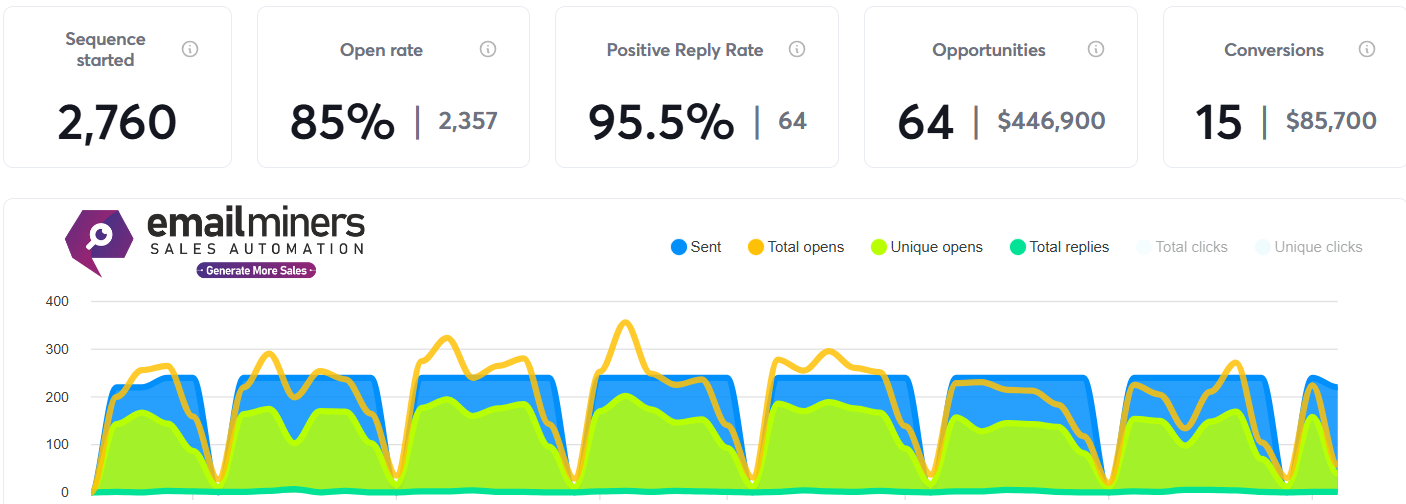
Snapshot 1 — B2B AI SaaS
Results:
📧 2,760 emails sent
📬 85% open rate 2,357 opens
💬 95.5% positive reply rate — 64 replies
💰 $446,900 pipeline created
✅ $85,700 closed revenue
What we engineered – Ops-only: domain/inbox architecture ➥ SPF/DKIM/DMARC alignment ➥ tracking hygiene ➥ ramp + rotation guardrails ➥ list safety rules.
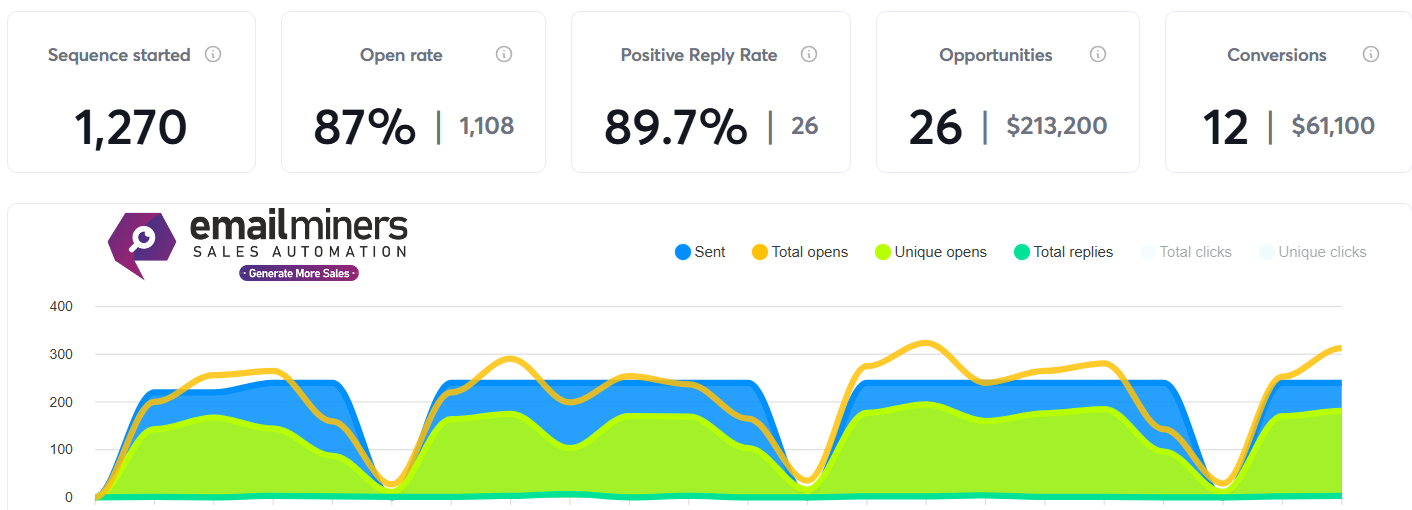
Snapshot 2 — Financial SaaS
Results:
📧 1,270 emails sent
📬 87% open rate – 1,108 opens
💬 89.7% positive reply rate — 26 replies
💰$213,200 pipeline created
✅ $61,100 closed revenue
What we engineered: Ops-only: same system foundations + governance ➥ tuned for micro-niche ICP and risk profile.
Note: Positive reply rate = replies expressing genuine interest or requesting more information — not % of total sends.
Infrastructure ensures inbox placement. Segmentation ensures the right people receive the message.
Industry average: 27.7% open rate · 3–4% reply rate.
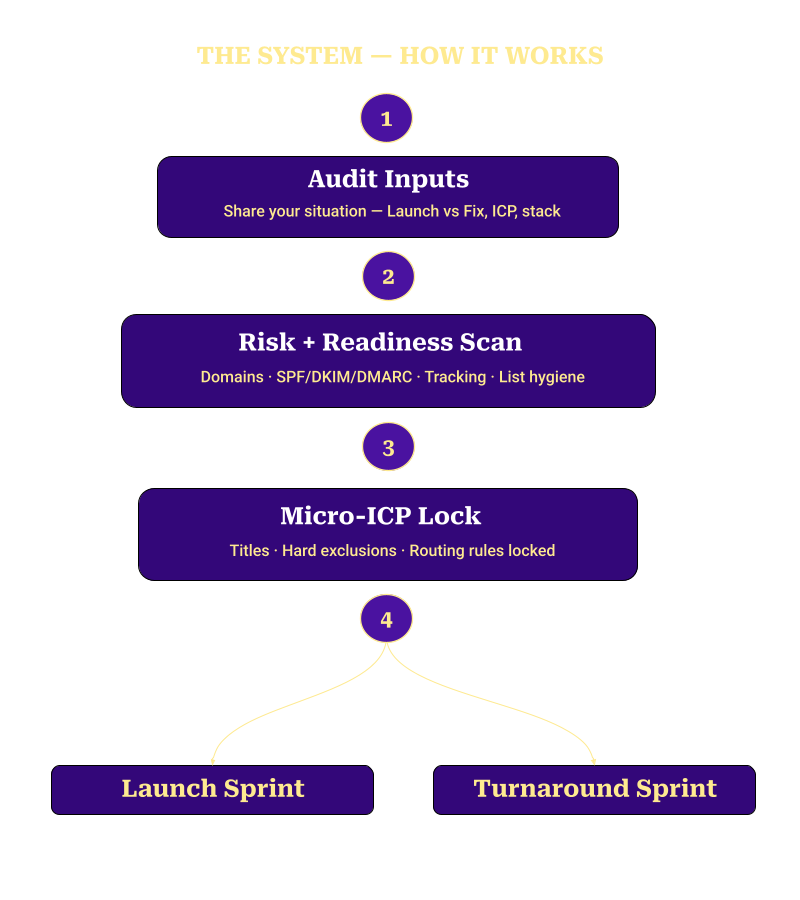
The System Behind the Results
Audit-first ➥ Launch/Fix ➥ Run/Guard
Engineered for inbox safety. Built for predictable scale.
✅ Step 1 — Audit Inputs – You share your situation — Launch vs Fix, ICP, target market, and current stack.
🔍 Step 2 — Risk + Readiness Scan – We audit domains, mailboxes, SPF/DKIM/DMARC alignment, tracking setup, and list hygiene risk signals.
🎯 Step 3 — Micro-ICP Lock – Titles, hard exclusions, and routing rules locked — so replies stay clean as volume scales.
⚙️ Step 4 — Launch Sprint or Turnaround Sprint – New infrastructure built from scratch — or existing setup repaired with full guardrails (ramp, rotation, throttling, auto-pause).
📊 Step 5 — Run/Guard – Ongoing monitoring + governance to prevent deliverability regressions as you scale.
This is not “send more emails.” It’s a controlled deliverability-safe outbound engine – built to scale without reputation damage.
What Gets Built & What Gets Fixed
👉 What gets implemented:
➢ Domain + mailbox architecture — capacity sizing, inbox allocation, rotation plan
➢ SPF / DKIM / DMARC alignment —correct auth setup to stabilize inbox placement
➢ Tool configuration (Instantly / your stack) — safe defaults, sending rules, throttles
➢ Tracking hygiene — reduce risky link/pixel patterns that trigger spam signals
➢ Ramp + rotation governance — controlled scale rules to protect domain reputation
➢ Monitoring signals + Run/Guard-ready —define what to watch and what actions to take
Every Sprint ends with full documentation — SOP, guardrails playbook, and 30-day scaling plan.
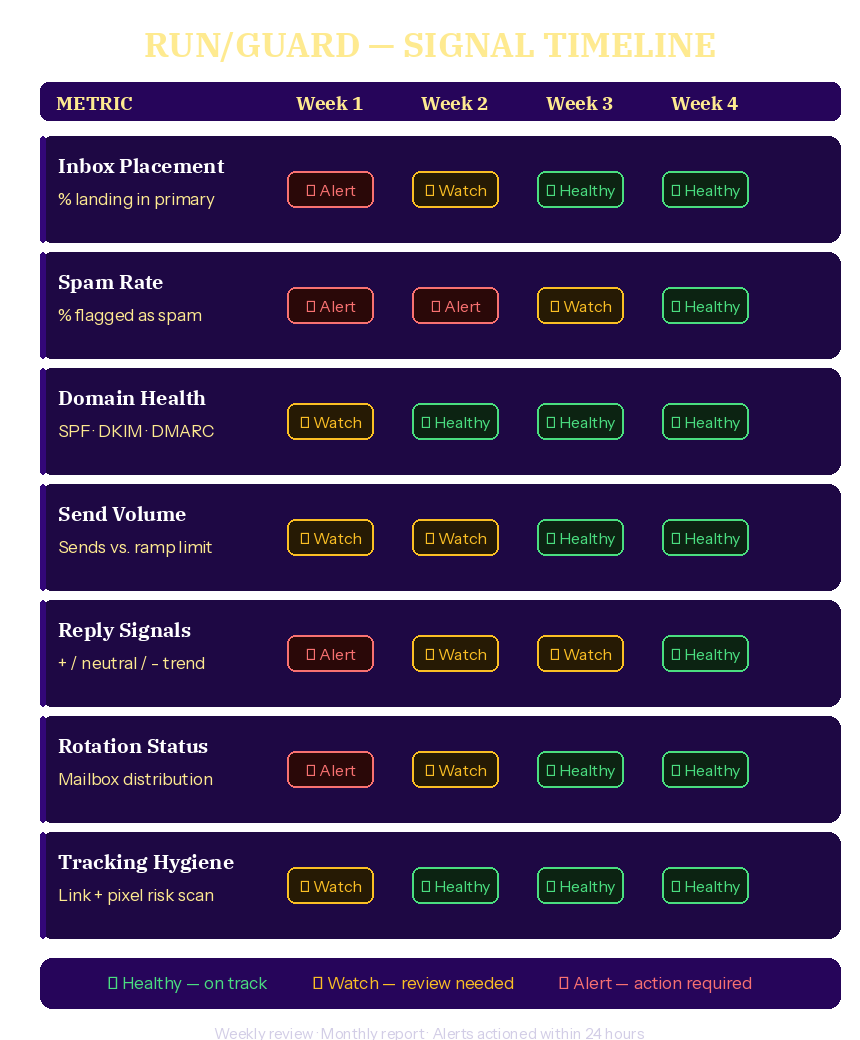
Scale Without Breaking Deliverability
Phase 3 of every engagement. Infrastructure doesn’t maintain itself — Run/Guard puts expert eyes on the system every week.
Most deliverability problems don’t announce themselves. Run/Guard catches them before they compound.
🛡️ What’s covered every month:
👉 Health monitoring + risk alerts ➥ domain, inbox, tooling signals tracked weekly
👉 Ramp + rotation governance ➥ scale rules enforced, unsafe lanes paused immediately
👉 Weekly action cadence ➥ what to change, pause, and test
👉 Tracking + sending hygiene controls ➥ prevent deliverability regressions over time
👉 Reply signal review ➥ positive/neutral/negative trend checks + list rule adjustments
Automate Your Outbound Ops
Add-On — Blueprint + Governance only. Scoped separately.
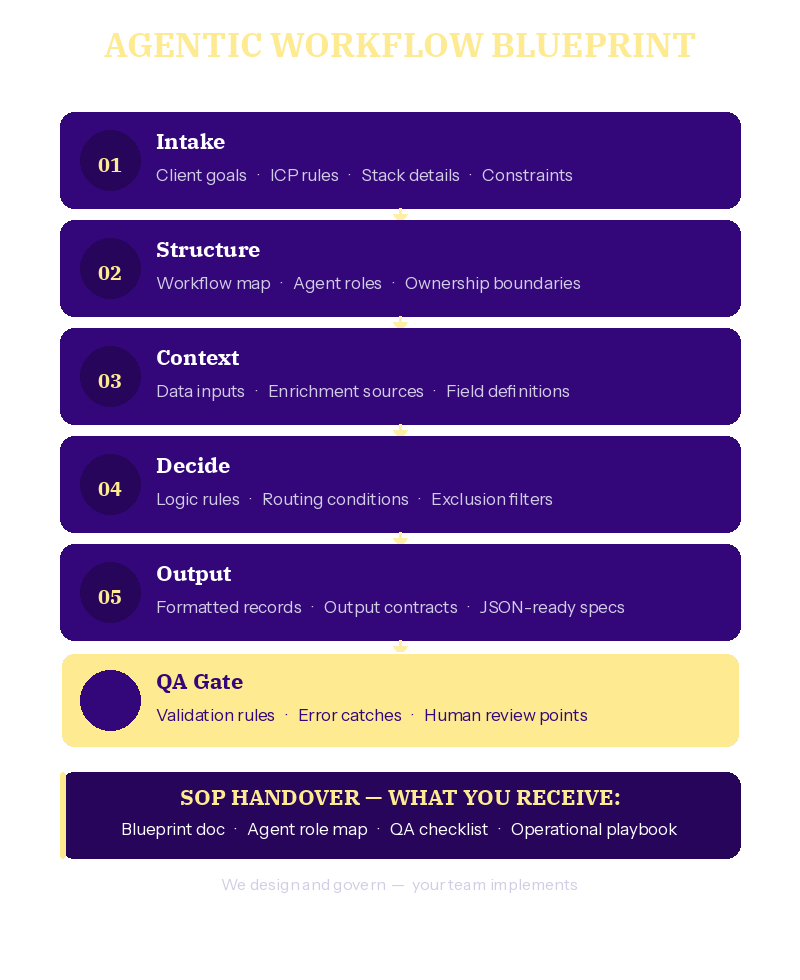
Agentic workflows designed for controlled execution — with QA gates and guardrails that catch errors before they reach your outbound.
What we deliver:
👉 Workflow blueprint ➥ intake → structure → context → decide → output → QA gate
👉 Agent roles + handoffs ➥ clear ownership, no black boxes
👉 Structured I/O specs (schemas) ➥ required fields + output contracts (JSON-ready)
👉 Validation rules ➥ dedupe, verification checks, suppression logic, risk flags
👉 QA checklist ➥ what passes vs what gets blocked + human review points
👉 SOP handover ➥ operational playbook for internal execution
Why B2B SaaS Teams Choose EmailMiners?
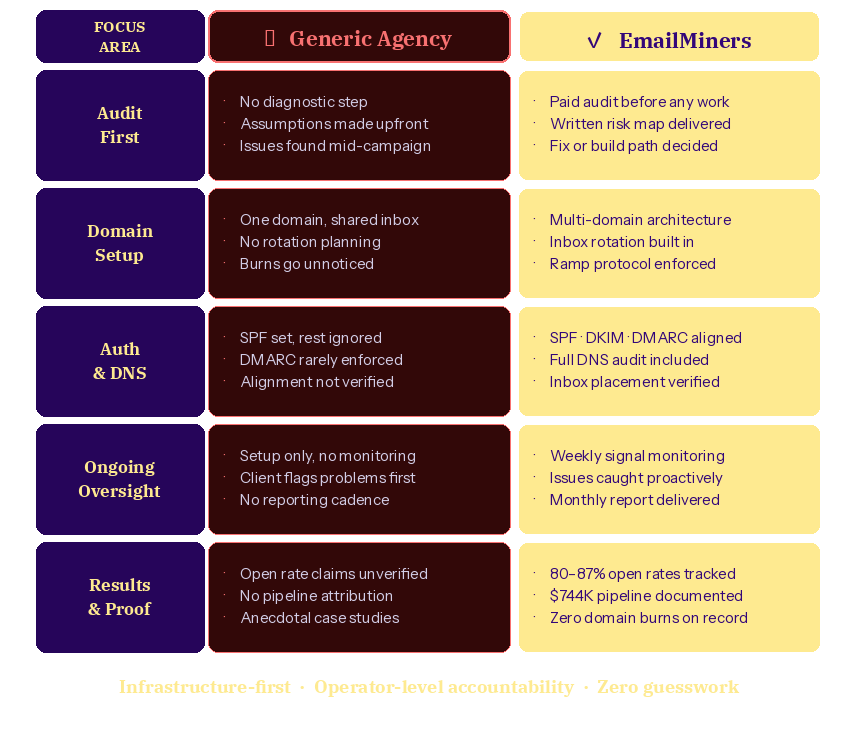
Most outbound fails at the infrastructure layer. We fix that layer first — before anything else.
1. Risk-first audit ➥ written report mapping safe vs risky across domains, inboxes, tooling, tracking, and data. No guesswork.
2. Micro-ICP lock ➥ titles, hard exclusions, and routing rules that protect reply quality as volume scales.
3. Infra built like an operator ➥ SPF/DKIM/DMARC alignment, tracking hygiene, ramp + rotation governance. Not a generic setup.
4. Launch vs Fix decisioning ➥ right path chosen before you burn more domains or inboxes.
5. Run/Guard governance ➥ weekly monitoring + action cadence so performance stays stable as volume ramps.
Results. In Clients Own Words.
“Spam stopped. Replies came back.”
They identified the risky signals quickly, cleaned the tracking and sending rules, & provided a recovery plan we could execute.
Jake O., CEO – B2B AI SaaS
(Series A)
“Blunt audit. Zero fluff.”
We finally had a clear, safe vs risky map and a decision on rebuild vs repair — no guesswork.
Marc V., Sales Director – B2B Automation SaaS – (Growth Stage)
“Micro-ICP rules + targeting got surgical.”
Titles + exclusions tightened the list, and reply quality improved immediately.
Noor H., Managing Partner – B2B Automation SaaS
(Seed Funded)
“Less waste. Cleaner lists.”
Verification + suppression rules reduced bounces and stopped us from burning good inboxes.
Isabelle T., Co-Founder – Fintech SaaS – (Series B)
“Robust infrastructure setup.”
2 companies. 2 wins. Best outbound and email infrastructure system setup. Vish nails it every time.
Steven L, CEO of MilesCX – B2B –
(LinkedIn)
“It became operational.”
Monitoring + weekly actions kept the engine stable without daily babysitting.
Ranya A., Director of BizDev – B2B Revenue Ops SaaS – (Series A)
Stop guessing. Start with an Audit.
Audit-first. Deliverability-safe. Built for B2B SaaS.
Start with a paid Outbound Readiness Audit — written risk map, Launch vs Fix routing, and a 30-day action plan. In 3 business days.
For Founders + Growth/RevOps teams scaling B2B SaaS outbound.
Paid diagnostic. Credited in full if you proceed within 7 days. Zero domain burns across every campaign we’ve run.
Frequently Asked Questions
If something’s unclear, the answer is likely here.
Still have questions? Email – bonjour@emailminers.com
What is the Outbound Readiness Audit?
A paid written report — not a sales call — that tells you whether outbound is safe to scale.
You receive:
➥ Risk map — infra, deliverability, and data risk flags
➥ Micro-ICP rules — 1 segment: target titles + hard exclusions
➥ Routing decision — Launch (new setup) vs Fix (existing)
➥ 30-day execution scope — what gets done, in what order
Who is this for?
Best fit for B2B SaaS Founders + Growth/RevOps teams when:
➥ You want outbound running safely in the next 30 days
➥ You’re already sending, and performance is slipping
➥ You want a Launch vs Fix decision before investing further
Not a fit if you want:
➥ Guaranteed meetings or booked calls
➥ High-volume blasting without safety guardrails
How much does the audit cost?
Paid written deliverable — not a discovery call. Implementation is separate and scoped after the Audit. Pricing shared after you get in touch.
Is the audit fee credited if we proceed?
Yes. Audit fee credited in full if you proceed with Launch, Fix, or Run/Guard within 7 days of receiving the report.
Is this a sales call?
No. You receive a written report with a routing decision and a scoped plan. Execution happens only if you choose to proceed — no pressure, no follow-up pitch
How fast is the audit and go-live?
➥ Audit report — 3 business days after kickoff + inputs received
➥ Go-live — Audit defines a 30-day scope (Launch or Fix)
No guesswork. Scope is written before implementation starts.
What does “Launch vs Fix” mean?
🚀 Launch — build cold email infrastructure from scratch. New domains, new mailboxes, correct setup from day one.
🔧 Fix — repair existing cold email infrastructure. Stop the damage, stabilize, rebuild with guardrails.
Audit routes you to the right path.
How do you decide Launch or Fix?
We check:
➥ Domain/inbox posture + SPF/DKIM/DMARC alignment
➥ Sending behavior — ramp and rotation risk
➥ Tooling + tracking risk — links, redirects, open tracking patterns
➥ List quality signals + suppression discipline
Output: safe vs risky flags + root-cause explanation + scoped 30-day plan.
What inputs do you need from me?
Choose one path:
➥ A) Sending tool admin + DNS access
➥ B) DNS access + screenshots
➥ C) Screenshots only (guided — works if access sharing isn’t possible)
Do I need technical knowledge?
No. You provide access or screenshots. You receive a readiness checklist, documented changes, and clear “what changed + why” notes.
Do you provide your own sending infrastructure?
No. We set up or repair your infrastructure. You retain full ownership of domains, mailboxes, tools, and data.
What tools do you support?
Audit is tool-agnostic. Execution commonly supports:
➥ Sending — Instantly, Smartlead, Lemlist
➥ Prospecting/Data — Apollo, Clay, LinkedIn Sales Navigator, Crunchbase
We implement the safest fit for your current workflow.
Will my emails land in inbox (not spam)?
No one can promise inboxing. What we do:
➥ Reduce deliverability risk signals
➥ Enforce guardrails and safe scaling rules
What does “positive reply” mean in your proof?
Positive reply = the sending platform’s classification of replies that express genuine interest or request more information.
It is not a % of total sends. Results vary by ICP, offer, list quality, and sending policy.
How do you measure success?
Three-layer scorecard:
➥ Layer 1 — Deliverability health: risk and stability trends
➥ Layer 2 — Reply signal quality: positive/neutral/negative trend
➥ Layer 3 — Pipeline attribution: only if your CRM tracks it cleanly
What is Agentic Ops Automation?
An add-on that designs the workflow and guardrails so your outbound ops run with structure and control.
Examples (outbound ops only):
➥ Data enrichment + validation pipeline
➥ Context gathering for personalisation
➥ Structured outputs with QA gates
What do you deliver for the Agentic add-on?
A blueprint that your team can implement:
➥ Workflow map — intake → structure → context → decide → output → QA gate
➥ Agent roles + handoffs — clear ownership, no black boxes
➥ Structured I/O spec — JSON-ready fields + contracts
➥ Validation rules + QA checklist
➥ SOP handover
How long does Agentic scope take?
No fixed timeline. Depends on workflow complexity — typically data and personalisation pipelines. Scoped explicitly before commitment.
Do you work with founders or SDR teams?
Both.
➥ Founder-led outbound — tight targeting, strict guardrails, minimal overhead
➥ SDR teams — sending governance + QA gates so SDRs don’t improvise and burn domain reputation
Audit defines the operating model and ownership structure.
What happens after the audit?
Two options:
➥ Proceed with Launch/Fix Sprint — scoped, 30-day implementation
➥ Keep the report and pause — no obligation to continue
Run/Guard is ongoing deliverability ops after go-live — Phase 3 of every engagement.
Ready to act?
Send a question — about your setup, your situation, or whether an Audit makes sense.
You’ll get a direct reply from Vish, not an automated template.
Skip the form. Start the Audit.
One paid diagnostic. 3 business days. A written report that tells you exactly what’s broken — and the path to fix it.
Paid Diagnostic.
Credited in full if you proceed within 7 days.
Zero domain burns across every campaign we’ve run.